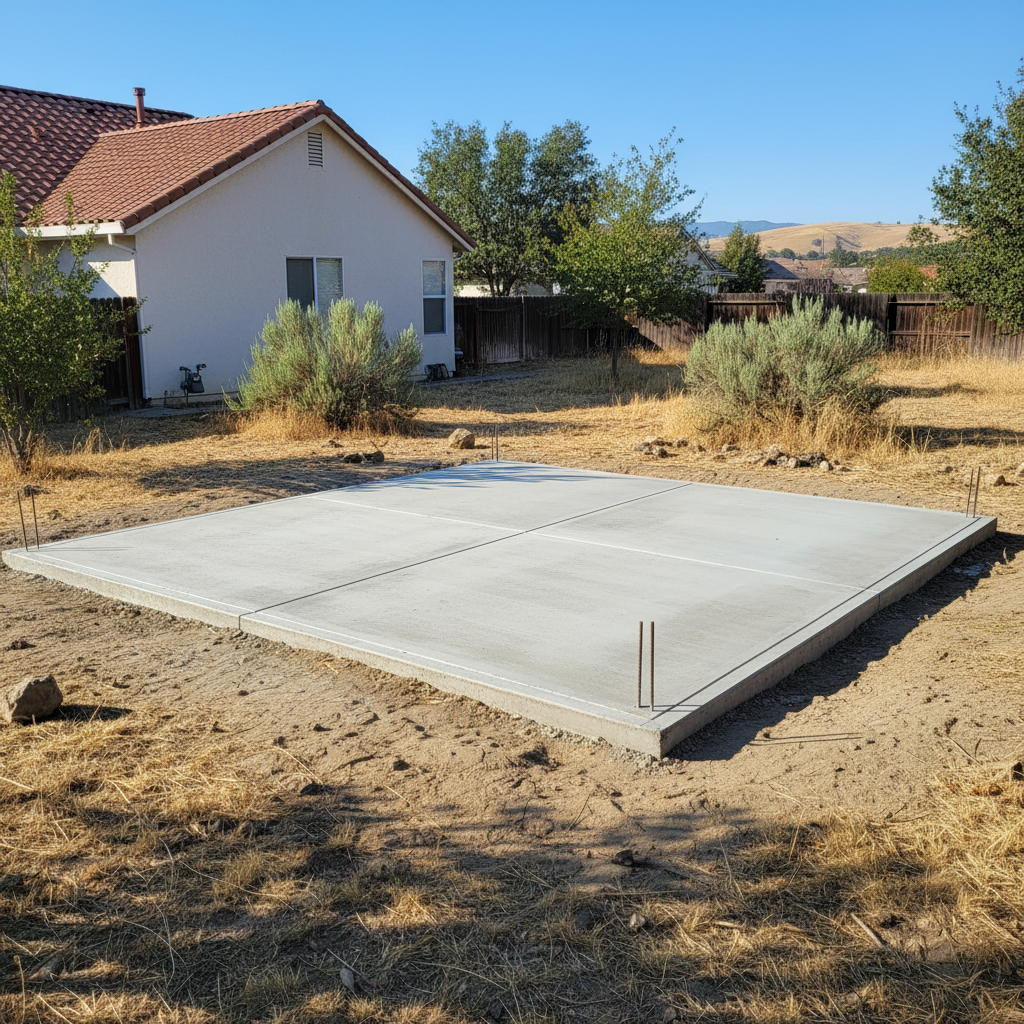
When's the best time to pour a shed foundation here in Oakdale? That's a question I get a lot, and honestly, there's no single perfect answer. It really depends on what kind of foundation you're putting in, and more importantly, what our unpredictable Central Valley weather is doing.
Understanding Our Local Weather for Foundations
You know how it is around here. We get those scorching summers, sometimes hitting 100+ degrees for weeks on end. Then winter can bring those cold, foggy mornings and sudden, heavy downpours. Both extremes can throw a wrench into foundation work if you're not careful.
For concrete foundations, which are super popular for sheds because they're durable and provide a solid base, temperature is a big deal. Concrete needs to cure properly. If it's too hot, it can dry out too fast, leading to cracks. If it's too cold, it cures slowly, or worse, if it freezes before it gains strength, it can be seriously compromised. We don't get a ton of hard freezes here in Oakdale, but those cold snaps in December and January are no joke.
Then there's the rain. Pouring concrete in the rain is a recipe for disaster. It dilutes the mix, weakens the concrete, and can wash away the surface. Even if you're just doing a gravel base or pier foundation, heavy rain can turn your site into a muddy mess, making excavation and leveling a nightmare. And let's not forget our local soil, especially in some of the older parts of town or areas near the river. It can get really saturated and stay wet for a long time after a good rain.
The Best (and Worst) Times to Schedule Foundation Work
From my experience, the sweet spot for most foundation work around here is spring and fall. Think late March through May, and then late September through November. The temperatures are usually mild, not too hot, not too cold. We still get some rain in spring and early fall, but it's generally less intense and more predictable than winter deluges.
- Spring (March-May): Generally good. The ground is usually workable, and temperatures are ideal for concrete curing. Just watch out for those late spring showers.
- Summer (June-August): Can be tough for concrete. If you absolutely have to pour in summer, you'll need to take precautions like using admixtures to slow down drying, keeping the concrete wet, and pouring early in the morning. It's also just plain brutal working in that heat.
- Fall (September-November): Often the best time. The summer heat has broken, and the really heavy rains usually haven't started yet. Perfect for getting a foundation done before the holidays.
- Winter (December-February): The riskiest time. Cold temperatures and heavy rain can delay projects significantly or impact the quality of your pour. If you're doing a pier and beam or gravel foundation, you might be okay if you get a dry spell, but concrete is a gamble.
Protecting Your Investment Year-Round
Once your foundation is in, whether it's concrete, gravel, or pier, you've got to protect it. It's the base of your whole shed, after all.
Drainage is Key
This is probably the most important thing. You don't want water pooling around your shed foundation, ever. Make sure the ground slopes away from your shed on all sides. Even a slight slope makes a huge difference. If you're in a low-lying area or have heavy clay soil, you might need to consider a French drain or some grading to divert water. Standing water can erode your foundation, lead to settling, and cause moisture issues inside your shed.
Regular Inspections
Just like you check your house, take a look at your shed foundation a couple of times a year. Walk around it, especially after heavy rains or a long dry spell. Look for cracks, signs of settling, or areas where water might be collecting. Small issues are much easier and cheaper to fix than big ones.
Keep it Clean
Clear away leaves, dirt, and debris from around the base of your shed. This helps with drainage and prevents moisture from getting trapped against the foundation walls, which can lead to rot for wood components or deterioration for concrete over time. If you've got a gravel base, make sure it's not getting clogged with organic matter.
Building a shed is a great investment, and getting the foundation right is step one. If you're planning a project and want to talk through the best approach for our Oakdale climate, give us a shout at Oakdale Shed Solutions. We're always happy to share what we've learned over the years.